
Reviewed · HISTORICAL TOURS
The Magnificent and Mysterious History of Glasgow
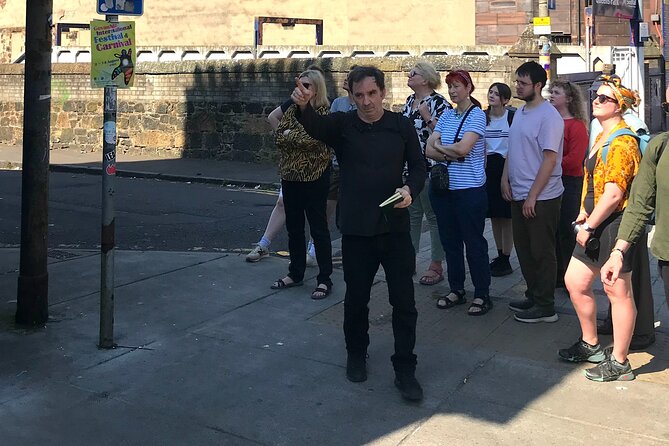
Glasgow can feel like a puzzle at first, and this walk gives you the map in real life. You start at George Square, then fan out through the Merchant City, slipping past statues, churches, museums, and even a well-known pizza stop. The best part is how the stories connect big monuments to everyday street corners.
Two things I really like: you get lots of sights packed into one route, and the guide stories have humor and momentum. Guides like Henry Bell and Bruce are the type who keep things clear, pointed, and easy to follow, even when the group is large. A possible drawback is that the tour covers a lot quickly, so you’ll want to stay close to the front and be ready to listen for about 2.5 hours.
Key Stops You’ll Remember
- George Square landmarks: City Chambers plus the Robert Burns statue story
- Merchant City power buildings: Merchants House, Trades Hall, and old civic sites
- Art and odd entertainment: Gallery of Modern Art, Trongate 103, and Britannia Panopticon
- Medieval-to-modern street culture: High Street murals, Mercat Cross, and candle-makers history
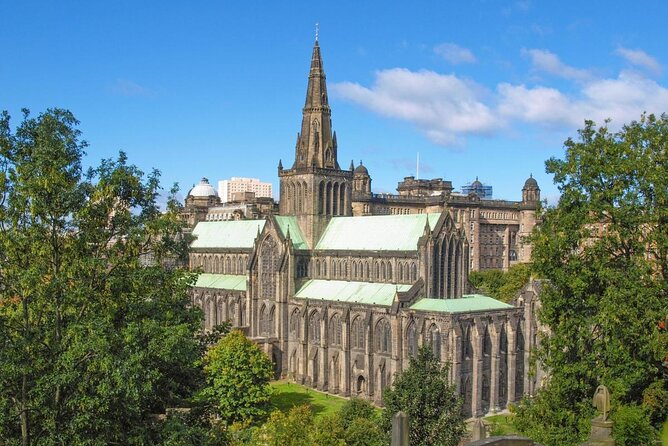
- The finish at old churches and museums: Glasgow Cathedral, Provand’s Lordship, and St Mungo
Glasgow on Foot: Why This Walk Gets You Oriented Fast
This is the kind of Glasgow tour that helps you stop guessing. In a couple hours you see how the city “reads” in layers: civic pride in the 19th century, mercantile wealth in the Merchant City, and older faith traditions that still shape the streets today.
You’ll do a lot of short viewing moments, not long museum marathons. That format is perfect if you want a first pass, then choose what to explore later. And because many stops are free to enter as part of the experience, you’re not paying extra again and again just to look around.
One practical note: it ends in a different place than where it starts. That’s not a dealbreaker, but plan your day so you can keep wandering afterward without feeling rushed.
More history tours in Glasgow:
- Glasgow: Pubs & History Walking Tour with Beer Tasting
★ 5.0 · 81 reviews - Old Town Walking Tour History and Tales in Edinburgh
★ 5.0 · 2,168 reviews - Old Town Historical and Underground Tour
★ 5.0 · 1,574 reviews
From George Square to the War Memorial: City Chambers and 19th-Century Glasgow
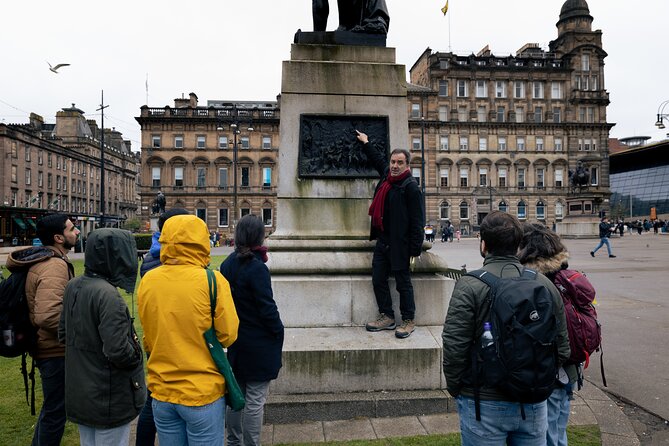
You begin at George House on George Square, right in the thick of the city’s grand public architecture. First up is Glasgow City Chambers, a building that basically shouts 19th-century ambition. Look closely at the sculpture details. Even if you’re not a statue person, these carvings help you understand how Glaswegians wanted to be seen: confident, industrious, and proud of what the city had become.
Next you hit the Glasgow War Memorial. It’s a turning-point stop, because it shifts the story from civic self-image to sacrifice and collective memory. You don’t just look at names. You get symbolism and context, which makes the monument feel less like a random landmark and more like a checkpoint in Glasgow’s timeline.
Both stops are quick, but they set the tone. You’re going to spend the rest of the walk asking why the city built things the way it did.
George Square Statues: Walter Scott and a Crowdfunded Robert Burns
Right in George Square, the tour pivots to two big storytelling magnets: Sir Walter Scott and Robert Burns. The Walter Scott statue is a reminder that Scotland’s modern idea did not arrive by accident. Scott helped shape what many people now think of as Scottish culture, and the statue is your visual shortcut into that larger influence.
Then comes Robert Burns. This is one of those stops that sounds like trivia until the scale hits you. This is described as the first monument to Scotland’s national poet, and it was funded by public “crowdfunding” before that word existed in daily life. The story includes thousands of people showing up for the unveiling, which makes the statue feel less like marble and more like a shared event.
If you like poetry, you may even catch the playful side of the tour here, with Burns referenced in a memorable way. If you don’t, you’ll still appreciate how public enthusiasm shaped a landmark.
Merchant Power in Stone: Merchants House, Trades Hall, and the City’s Real Engine
After the square, the walk moves into the Merchant City, where you start seeing Glasgow’s wealth in built form. The Merchants House stop is a good example. This building gives you a feel for how merchants viewed themselves and how that identity helped drive prosperity. You’ll get enough context to understand why these places mattered, even when they look like everyday city architecture at first glance.
A bit later, Trades Hall brings another key group into focus. This is where traders and tradespeople were represented, including roles like carpenters, tanners, and dyers. It’s not abstract. The idea was practical: support members who became too old to work. That changes the tone of the visit from “big business” to “working life and community responsibility,” which is one reason this area still feels human.
And along the way, you’ll likely notice the tour keeps switching between the official and the personal. Statues and halls, then streets and side stories, then back to institutions again. It’s a smart way to keep the walk from turning into one long history lecture.
Other days out from Glasgow worth comparing
- Guided Celtic Park Stadium Tour
★ 5.0 · 3,136 reviews - Tennent’s Brewery Tours Ticket
★ 5.0 · 1,938 reviews - City Sightseeing Glasgow Hop-On Hop-Off Bus Tour
★ 4.5 · 1,873 reviews - Oban, Glencoe, Highlands Lochs & Castles Small Group Day Tour from Glasgow
★ 5.0 · 1,432 reviews
Art, Old Homes, and a Music Hall Legend: From Gallery to Trongate to Panopticon
Glasgow is famous for creativity, and this tour shows it without needing modern hype. The Gallery of Modern Art is a standout because it began as a private mansion. That detail matters. You’re not just looking at art now. You’re stepping into a building that kept changing jobs, like the city itself did.
Trongate 103 is another culture anchor. It’s an arts centre in the middle of the action, and the tour points out attractions housed there, including the Sharmanka Kinetic Gallery. Even if kinetic art isn’t your usual thing, the point here is how Glasgow repurposes space. An old city doesn’t always stay old. It adapts.
Then you get Britannia Panopticon Music Hall. The tour calls it the world’s oldest surviving music hall, and it includes a strong pop-culture connection: young Stan Laurel performed there. That’s a fun bridge between local entertainment history and the broader comedy world you might already know.
This cluster of stops is one of the best parts of the route because it shows Glasgow’s creative side in buildings you can actually see.
Quirky Stops That Make the Tour Feel Local: Duke, Cones, Paesano, and More
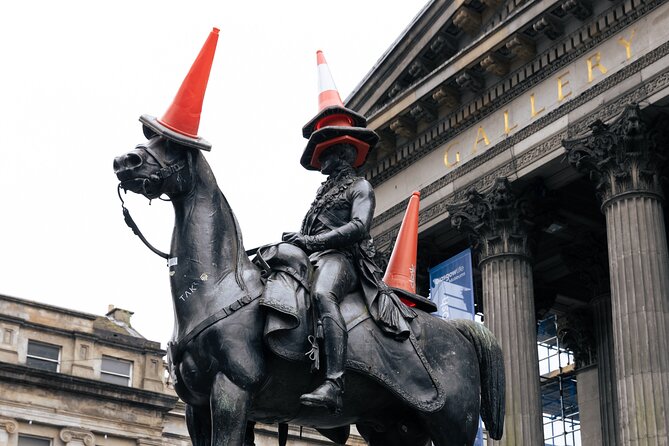
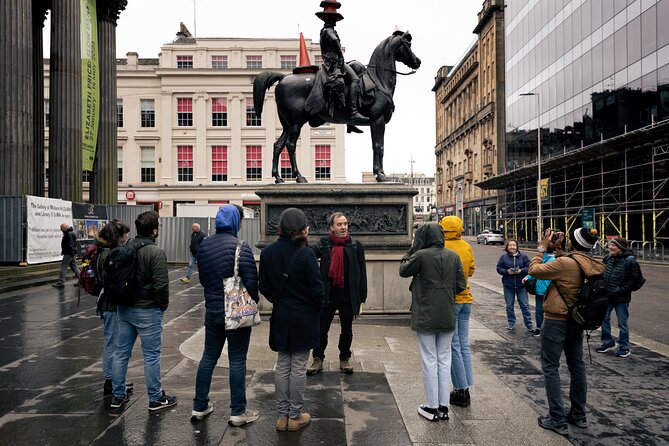
Not every stop is a solemn monument. Glasgow loves its mix of pride and mischief, and the tour leans into that. The Duke of Wellington statue is famous today because of the traffic cone on his head. Even if you’ve seen photos online, it lands differently when you stand near it and hear how it became part of the city’s humor.
Then there’s Paesano Pizza, one of the popular pizza places in Glasgow. The tour doesn’t just name-drop. It adds an anecdote about the past, including a special job opportunity once tied to the place. It’s a short stop, but it’s also a helpful reminder that your history route should still keep you grounded in everyday city life.
You’ll also encounter an 18th-century Georgian townhouse in the heart of modern Glasgow, with a story about the original family that lived there. And later you’ll see the Corinthian Club, a building that used to be a bank, courthouse, and county building before becoming a high-profile club and wedding venue. That reuse theme shows up again and again, and it’s one reason the tour feels like Glasgow, not just a list of sights.
Medieval-to-Modern Streets: High Street Murals, Mercat Cross, and Candle Makers History
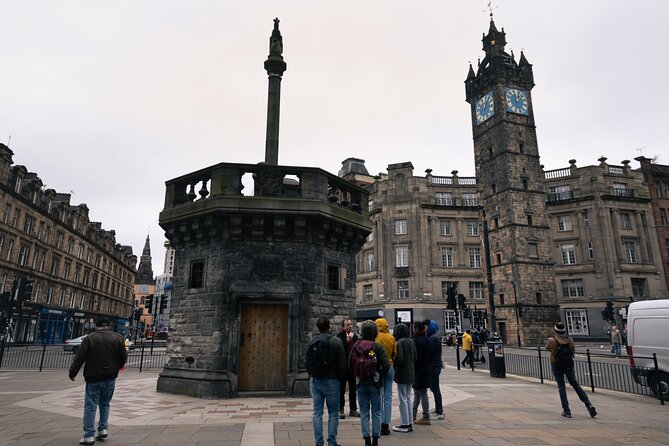
One reason people like this walk is that the route keeps connecting time periods. You don’t only go from one major attraction to the next. You also step onto streets that explain how the city was organized.
High Street is the big medieval artery here. The tour highlights the road as the heart of medieval Glasgow and points out several attractions along it, including murals tied to St Mungo, Glasgow’s patron saint. You’ll also hear about the site of the old University, said to be the fourth oldest in Britain. Even if you’ve never studied Scottish education history, the stop gives you a sense of why this area mattered beyond commerce.
Mercat Cross is next, a recreation of a medieval market cross where proclamations were made. It’s the kind of detail that makes you look up and realize how public messages once had a physical “megaphone” in the city.
There’s also a medieval street connected to candle makers, set apart from the old town to reduce fire risk. Later it served as markets and warehouses, and now it’s part of the cultural district. That’s a small stop with big pay-off, because it shows the city’s practical decisions turning into a modern creative zone.
The Big Finish: Ramshorn, Royal Infirmary Museum, Glasgow Cathedral, and St Mungo
The final stretch is where the walk turns from monuments to institutions of faith, care, and memory. Ramshorn Theatre is an especially interesting transition. The building opened in 1824, replacing an earlier church on the site, and many important people are said to be buried there. It also shifts roles over time, serving as a theatre and later becoming a centre for language studies owned by the University of Strathclyde.
Then you visit Friends Of Glasgow Royal Infirmary Museum. The tour describes it as the oldest hospital in Glasgow and notes that medical innovations were pioneered there. Even if you’re not a medical-history fanatic, this stop adds weight. It’s a reminder that progress in Glasgow wasn’t only about industry and commerce.
Finally, you reach the headline finale: Glasgow Cathedral. The tour finishes with a look inside. The site is tied to a church tradition going back to the 6th century, and the current cathedral dates to the 13th century. After that, Provand’s Lordship (dating back to the 14th century) is another key old-building stop near the end.
The last stop is St Mungo Museum of Religious Life and Art. It’s built to look older than it is, and it celebrates different religions followed around the world. That ending lands well because it ties back to St Mungo themes and Glasgow’s long relationship with faith and civic identity.
Price and Pace: What You Get for $17.91, Plus One Smart Tip
At about $17.91 per person, this feels like strong value if you want orientation and context in a single outing. The tour includes a lot of stops, and many of them are listed with free admission. So you’re paying for interpretation and route design, not for ticket line items. For a city like Glasgow, that matters.
The pacing is another part of the value. The walk is roughly 2 hours, 4 minutes to 2 hours, 14 minutes on paper, but the experience also notes it can run closer to around 2 hours 45 minutes. Either way, it’s fast enough that you’ll likely skim the surface on purpose, then choose a few places to return to later.
For the best experience, here’s my one practical tip. Position yourself where you can hear the guide at each stop. A couple of people in past groups have had trouble catching every word when the group spread out. If you want the full story, don’t hide behind a taller person at the statue stops.
Group size is capped at 15, which helps. Still, if you’re picky about audio, aim to be near the front.
Should You Book This Glasgow Walk?
Book it if you want a smart first look at Glasgow’s central streets, you like walking between landmarks, and you enjoy hearing how monuments connect to real people and real decisions. It’s especially good for repeat visitors who want to understand what you’re seeing, fast, before choosing deeper day plans.
Skip it or pair it with slower time if you prefer long stays inside major sites, or if you want one unified theme treated with deep argument. This tour is built like a guided circuit. You’ll get plenty of facts and stories, but the route changes topics often.
If you’re visiting in cooler months or after heavy rain, check that day’s weather. The experience notes it requires good weather, and if conditions are poor, you’ll be offered a different date or a refund.
FAQ
How long is the tour?
It runs about 2 hours 4 minutes to 2 hours 14 minutes, and it’s also described as lasting approximately 2 hours 45 minutes.
Where does the tour start and end?
It starts at George House, 50 George Square, Glasgow G2 1EH, and it ends outside the Ramshorn Church on Ingram Street, near the 98 Ingram St, Glasgow G1 1EX area.
What language is the tour offered in?
The tour is offered in English.
Is the ticket mobile?
Yes, you receive a mobile ticket.
Are admissions included for the stops?
Many of the listed stops are marked with free admission ticket access as part of the tour.
How big is the group?
The tour has a maximum of 15 travelers.
Is this tour mostly outdoors?
It’s a walking tour through the city center, with walking time between attractions totaling about 40 to 45 minutes.
What if weather is bad?
The experience requires good weather. If it’s canceled due to poor weather, you’ll be offered another date or a full refund.
Are service animals allowed?
Yes, service animals are allowed.
Just reviewed around Glasgow
- Glasgow; Stirling & Loch Lomond Private Tour★ 5.0 · 11 reviews
- The Essential Bike and E Bike Tour of Glasgow Center and Beyond★ 5.0 · 11 reviews
- Outlander Tour★ 5.0 · 12 reviews
- St Andrews & Fishing Villages of Fife Private Tour from Glasgow★ 5.0 · 12 reviews
- Bannockburn & Stirling Castle Private Tour from Greater Glasgow★ 5.0 · 12 reviews
- Private Tour of Glasgow Distilleries and a Loch Lomond Cruise★ 5.0 · 13 reviews
- Private Glasgow West End Tour: Arts and Culture★ 5.0 · 13 reviews
- Discover Glasgow. Full day private tour in people carrier.★ 5.0 · 13 reviews
Historical Tours, compared.
Old Town Walking Tour History and Tales in Edinburgh
Read our review →

Multi-Sensory Small-Group Historic Vaults Tour in Edinburgh
Read our review →
Edinburgh Old Town: Historical Guided Walking Tour
Read our review →

Browse the lists this tour appears in