
Reviewed · SELF-GUIDED TOURS
Glasgow Private Self-Guided Tour
Glasgow in a few hours is doable, and this self-guided route is a smart way to do it. You get a real audio guide by Alex as you move through the city, with stops that jump from medieval stone to 21st-century street art. I like that the route is built for an unhurried pace, so you can slow down when a detail catches your eye.
Two things I really like: first, the mix of Glasgow Cathedral’s deep past with the Glasgow Necropolis and then murals in between, so you do not just tick boxes. Second, the practical flow, you end near St Enoch Subway Station, which makes it easy to keep going afterward. One thing to consider is that this is not a live guide. If you want someone to answer questions on the spot, you will have to rely on the audio and your own curiosity.
Key highlights to know before you go
- Alex’s audio guide: narrated by Alex, designed to keep you moving stop to stop
- Cathedral to Necropolis timing: about 30 minutes at Glasgow Cathedral and 15 minutes at the Necropolis
- Murals are the point, not extra credit: you get multiple mural stops plus street-art context
- University and Merchant City mix: Strathclyde University, Merchant City signals, and major civic sights
- Easy finish: the walk wraps up near St Enoch Subway Station
A Self-Guided Glasgow Loop That Reads Like a Real Walk, Not a Script
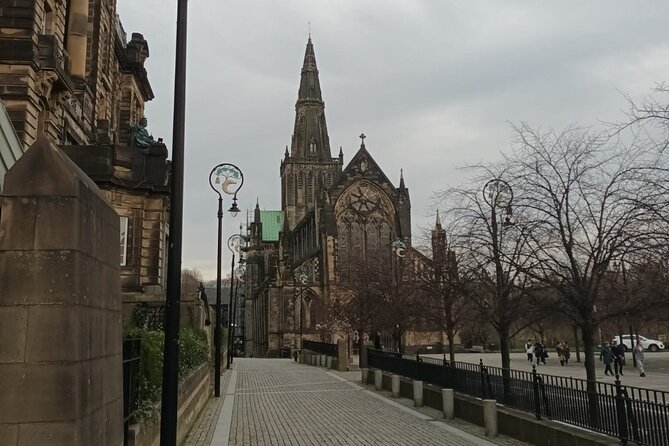
This is the kind of tour you choose when you want structure, but not a crowd. You will start at Glasgow Cathedral and finish at St Enoch Subway Station, which gives you a clear route without needing to think about every turn.
The value is in the design. The app gives you a map, GPS route, and the audio guide, so you are not constantly checking your phone like a panicked tourist with a dead battery. And because you can take it at your own pace, you can linger at a mural close-up or skim faster when you want to hit the next landmark.
The biggest trade-off is the “self-guided” part. You are the one controlling timing. If the audio quality is not to your liking, or if app navigation feels clunky for you, that is on your experience, not on a person standing next to you.
More self-guided routes in Glasgow:
- Glasgow Ghost Hunt: The Soul That Got Away Exploration Game
★ 4.0 · 71 reviews - Cycle To Loch Ness – Self Guided
★ 5.0 · 119 reviews - Harry Potter’s Edinburgh: A Self-Guided Audio Tour
★ 4.5 · 42 reviews
Price and timing: $12.37 for a 2 to 3 hour city reset
At $12.37 per person, this sits in a great “low-stress add-on” category. It is especially good value if you are trying to make the most of a short visit and you still want history plus modern culture.
The duration is listed as about 2 to 3 hours, but the route naturally works when you extend it a bit. If you enjoy stopping for photos, reading street art details, or simply walking more slowly than a typical group, you will likely drift longer.
One practical tip: you might treat it as a first pass. After this, you will have a better sense of where things are, what neighborhoods feel like, and which stops deserve a return visit.
Starting at Glasgow Cathedral: what to listen for in the first 30 minutes
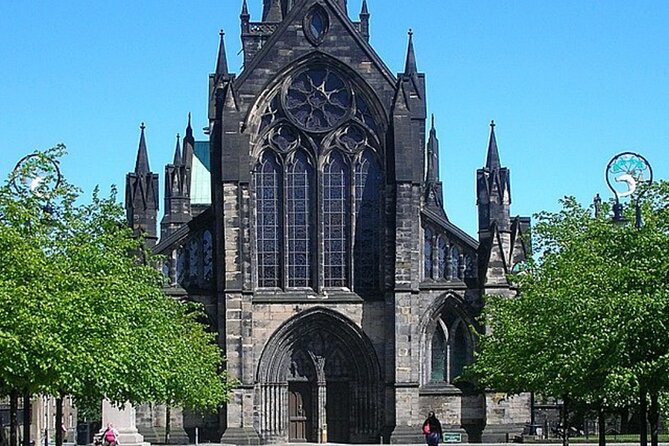
You begin at Glasgow Cathedral on Castle Street. The tour’s Cathedral segment is planned for about 30 minutes, which is a useful chunk of time for reading plaques, looking around the churchyard area, and getting your bearings.
What makes this stop meaningful is the story it frames for you. The Cathedral you see here traces back to 1197 after an earlier 12th-century cathedral was destroyed by fire. The tour’s narration emphasizes that worship continued for more than 800 years, so you are not just looking at a pretty building, you are walking through continuity.
When I recommend this start, I do it for a simple reason. Cathedral time helps you calibrate your brain for Glasgow. After you understand a bit of the city’s religious and civic roots, the later mural and Merchant City stops land with more context.
Necropolis break: 15 minutes that turns a cemetery into an urban landmark
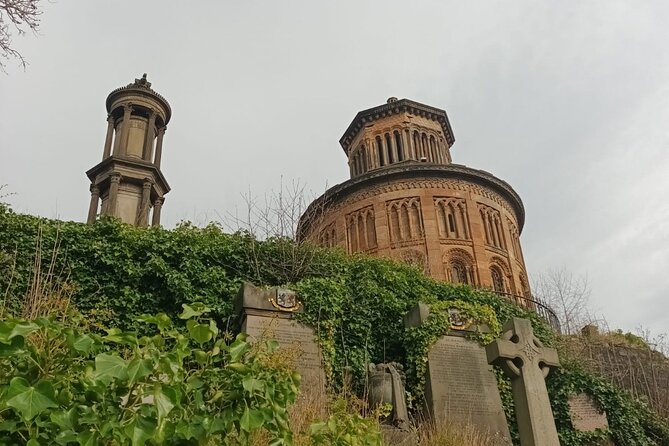
Next up is The Glasgow Necropolis, a graveyard established in 1831 and inspired by Père Lachaise in Paris. The tour sets aside about 15 minutes, and that is just enough time to grasp the scale and notice the planning choices.
The standout fact to pay attention to is the size. The Necropolis stretches over 37 acres, roughly the equivalent of 15 soccer fields (the tour gives that comparison), covering about 150,000 square meters. That is huge enough that you should walk slowly rather than trying to rush.
If you do not usually like cemeteries, this stop can still work. The narration helps you see it as a 19th-century statement about status and memory, not just a place for the dead. Look for the city-planning idea in how it is laid out, then move on before it becomes too heavy.
Other days out from Glasgow worth comparing
- Guided Celtic Park Stadium Tour
★ 5.0 · 3,136 reviews - Tennent’s Brewery Tours Ticket
★ 5.0 · 1,938 reviews - City Sightseeing Glasgow Hop-On Hop-Off Bus Tour
★ 4.5 · 1,873 reviews - Oban, Glencoe, Highlands Lochs & Castles Small Group Day Tour from Glasgow
★ 5.0 · 1,432 reviews
Provand’s Lordship and the “why is this here?” effect
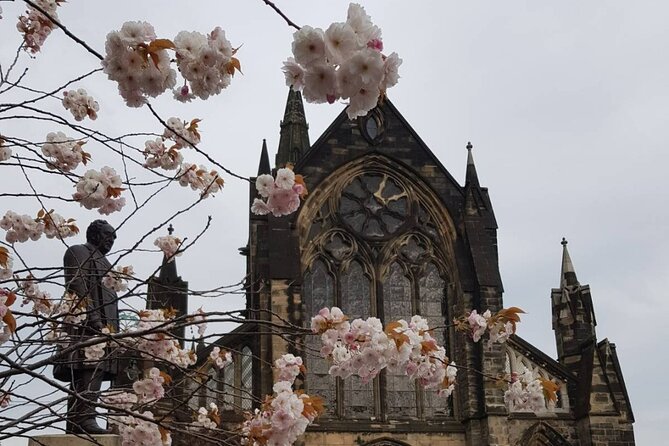
Between major landmarks, you will hit smaller stops that explain what Glasgow loved to repurpose. One of the stone buildings you will encounter is known as Provand’s Lordship. The tour notes that it has been called that since the late 19th century, and that before that it was the Hospital of St Nicholas.
Stops like this matter because they show you how buildings evolve. A church-related hospital becomes a named heritage structure. The city’s layers stop being abstract and start feeling tangible.
At this point in the walk, you will also shift from architecture-only to a city-wide story. Glasgow is famous for murals, and the tour guides you to that thread early enough that it does not feel random later.
Following Glasgow murals the right way: from walls to meaning
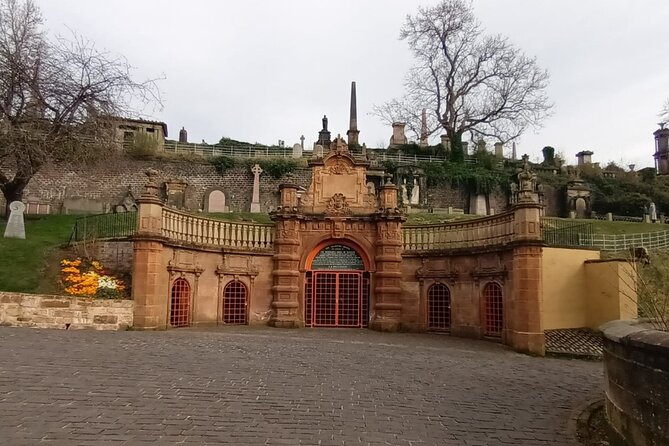
Glasgow murals are not just decoration here. The tour is set up as a street-art route, with multiple mural stops and context on how and why they were used to revitalize neglected areas.
You will get a mix of mural styles and messages, including a stop connected to Strathclyde University. That university segment is planned for about 15 minutes, and the point is not only the campus architecture. It’s also the murals and visual details around it, so you see how art and institutions share the same city space.
Then you have a more focused mural stop with St Enoch cradling St Mungo. The narration sets you up to notice details, including the idea that the mural is a futuristic representation of St Mungo. This is the kind of mural where you get the most out of it by slowing down and looking up, not by passing with your camera at waist level.
The street-art route culminates with additional murals later in the walk, but the early stops help you learn what to look for. When you know what a mural is trying to do, you stop treating them like wallpaper.
Tron church and Trongate: why names matter in Glasgow
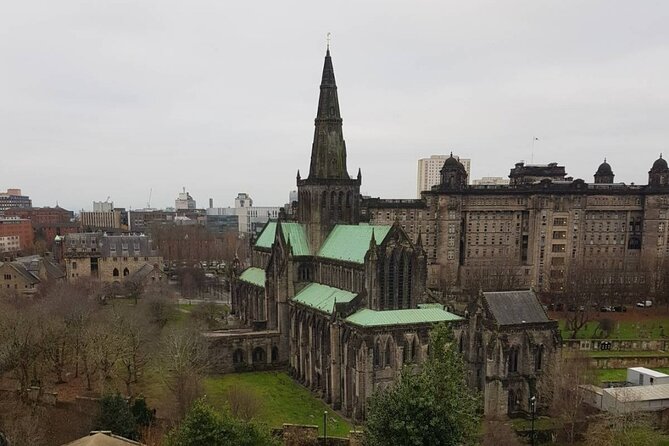
One of the guided story turns comes with a building connected to Tron Church, which today is the Tron Theatre. The street is called Trongate, and the tour explains the older name, Saint Thenew’s Gait.
The useful part here is the connection to Saint Enoch, also known as Saint Mungo’s mother. In other words, you are learning that street names and church names carry memory. When you connect that to what came before and who the saints were, the city’s street map becomes more than directions.
If you like walking tours that make you feel smarter at the end, this is one of the moments that does it. Names become clues, not trivia.
Museum and Merchant City signals: Glasgow’s public power story
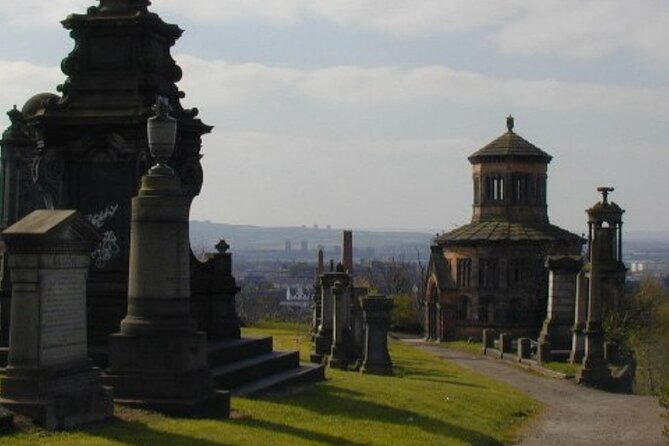
As you move along, you will also reach a museum stop about the Glasgow police force, with the history covering 1800 to 1975. The tour frames it as insight into the people, events, and factors behind the development of the city’s police force.
Even if you only spend a short time here, it adds a different layer. You get medieval worship, Victorian grave planning, street art, and then modern civic systems. It is a full-spectrum city walk.
You will also pass in the Merchant City area, where you get an emblem that feels intentionally weird. The tour points out a statue of Mercury, the Roman god linked to financial gain, commerce, eloquence, poetry, travellers, boundaries, luck, trickery, and thieves. Mercury stands on a marble plinth, and there are two sculptures of Mercury made by Alexander Sandy Stoddart.
Pay attention to the why. The tour frames these statues as representing the Italian quarter of Merchant City. That means this is not random public art, it is part of the city’s identity marketing and cultural storytelling.
98 Ingram Street and the tobacco merchant layer you might miss
Another stop is 98 Ingram St, tied to the church originally built in 1824. The design is credited to English architect Thomas Rickman in the gothic revival style, which you can usually spot quickly from the shape and details.
This stop also connects to the older Ramshorn cemetery area that is now partly covered by Ingram Street. The tour notes that the Ramshorn cemetery was the more fashionable, and expensive, place to be buried in the 18th century before the Necropolis became the new choice.
If you like how cities track wealth over time, this is your payoff. You see how economic power shows up in who gets buried where, and how urban development quietly covers it all.
City Chambers and George Square: a Georgian plan that took its time
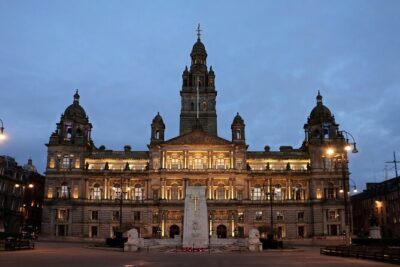
Later, you will pass by the City Chambers, completed in 1888 and inaugurated by Queen Victoria, who is honored with a statue at the opposite end of George Square. The tour also hints at a connection that it frames for you like a puzzle, so you can look around and see what that comparison is pointing at.
George Square itself ties into planning. The square is named after King George III and it was laid out as early as 1781 as part of a grid-style Georgian scheme, but it took about 20 more years to develop the square.
This is a good moment to slow down and look around the square. It helps you feel the scale of Glasgow’s civic ambition, then lets you contrast it with the more personal, human scale of the murals you saw earlier.
The Gallery, Mackintosh vibes, and the Tea Room story you can feel
You will reach a major gallery stop described as must visit. The narration is designed to give you what you need to appreciate the place without getting overwhelmed.
Then you will hit a 1983-era spot with an interior inspired by Charles Rennie Mackintosh. The tour also explains that the tea room itself is modeled on Kate Cranston’s Ingram Street tea rooms from the early 1900s, and that Alex shares the origin story.
Even if you do not plan to stop for tea, this part is valuable. It shows how Glasgow moved from trade and civic power into a design identity people actively build and preserve. If you are the kind of traveler who loves design history, you will likely find yourself lingering.
Buchanan Street to St Enoch: finishing the circle near the subway
The tour brings you to Buchanan Street, described as Glasgow arriving in the 21st century after earlier stops that covered medieval roots and tobacco merchant history, plus the city’s 1990s era.
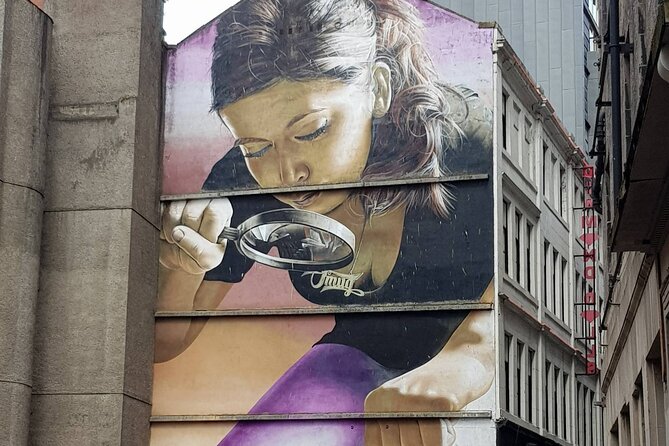
This finishing stretch is where the route feels like it all clicks. You get one final mural stop called Honey, I shrunk the Kids, described as photo-realistic street art. The last part sets up a satisfying round trip, since the tour ends close to St Enoch subway station, near the Roman Fort.
If you want a simple next step, plan to use the subway to connect to dinner or your next neighborhood. The fact that the route ends at transit is not an afterthought, it is part of the value.
How to get the best experience with an app-led audio tour
This kind of tour works best when you treat it like an easy walking plan, not like a museum guide. Download the Pandemic Tours app after your booking is confirmed, then use the activation email instructions to get going.
A few practical notes based on what I know tends to make audio tours frustrating:
- Bring a small battery backup so your phone does not die mid-walk
- Use headphones and keep volume high enough to catch names and dates
- If navigation makes you bounce between screens, pause your walk for a moment so you do not lose your place
Also, set your expectations. There is no live guide, so you should be comfortable with self-direction. If you want someone to explain and improvise, this will feel limiting.
Should you book this Glasgow Private Self-Guided Tour?
Book it if you want a low-cost, high-variety Glasgow walk that mixes landmark history and street art. It is ideal for solo travelers, couples, and small groups who like freedom and dislike being herded.
Skip it if you know you get annoyed by app navigation or if you require live explanation. Audio-only works best when the narration style matches your taste, and app routing works best when you are willing to follow the map for a few blocks at a time.
FAQ
Is this a live guide or a self-guided tour?
This is a self-guided experience. You will get an audio guide by Alex through the app, but there is no live guide included.
How long does the Glasgow Private Self-Guided Tour take?
The tour is listed as about 2 to 3 hours.
What does the $12.37 price include?
Your price includes 3 weeks of unlimited access to the self-guided tour in the app, plus the map, directions, GPS route, and the audio guide with videos, pictures, and recommendations.
Are entrance fees included?
The tour information lists the mentioned stops as having admission ticket free for those specific stops. Entrance fees are not listed as included in the overall package.
Where do I start and where do I finish?
You start at Glasgow Cathedral, Castle St, Glasgow G4 0QZ. You finish at St Enoch Subway Station, Glasgow G1 4BW.
What language is the tour available in?
The tour is offered in English.
How do I access the tour after I book?
You must download the Pandemic Tours app once your booking is confirmed, and you will receive an email with instructions to activate your tour.
Is there a time limit during the day?
The experience is listed with opening hours as 12:00 AM to 11:30 PM across the listed validity period, and it runs Monday through Sunday.
Is it refundable if I need to cancel?
This experience is non-refundable and cannot be changed for any reason.
Just reviewed around Glasgow
- Glasgow; Stirling & Loch Lomond Private Tour★ 5.0 · 11 reviews
- The Essential Bike and E Bike Tour of Glasgow Center and Beyond★ 5.0 · 11 reviews
- Outlander Tour★ 5.0 · 12 reviews
- Bannockburn & Stirling Castle Private Tour from Greater Glasgow★ 5.0 · 12 reviews
- St Andrews & Fishing Villages of Fife Private Tour from Glasgow★ 5.0 · 12 reviews
- Private Tour of Glasgow Distilleries and a Loch Lomond Cruise★ 5.0 · 13 reviews
- Private Glasgow West End Tour: Arts and Culture★ 5.0 · 13 reviews
- Discover Glasgow. Full day private tour in people carrier.★ 5.0 · 13 reviews
Self-Guided Tours, compared.
Glasgow Ghost Hunt: The Soul That Got Away Exploration Game
Read our review →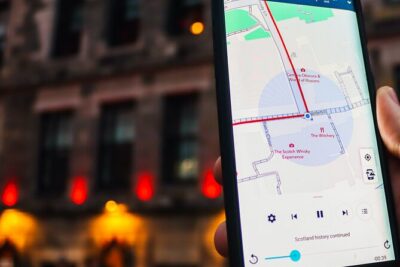
Harry Potter’s Edinburgh: A Self-Guided Audio Tour
Read our review →
500 Years of Crime and Punishment: A Self-Guided Audio Tour
Read our review →
Ghosts of Edinburgh: Bloody Past Exploration Game and Tour
Read our review →
The Dark Side of Aberdeen: A Self-guided Audio Walk
Read our review →

Discovering Inverness: A Self-Guided Audio Tour of the Capital of the Highlands
Read our review →Browse the lists this tour appears in