
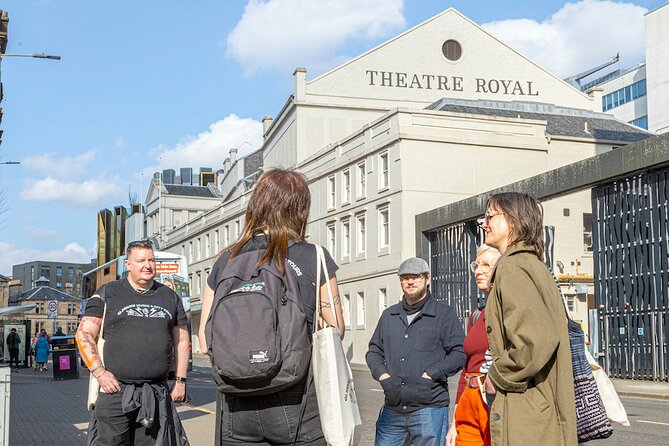
Reviewed · WALKING TOURS
Glasgow’s Music Mile Walking Tour
Glasgow’s Music Mile walking tour is interesting because it turns a simple stroll into a band-by-band soundtrack, from formal concert halls to places where musicians still find their next gig. It is a fast, city-centered way to learn the local scene without getting stuck in museums.
What I really like is the story-first guiding, often with guides such as Fiona or Felipe bringing in music-journalist level detail and sharp anecdotes. I also like that you hear how venues connect over decades, and you get chances to pause for a drink at Nice ‘n’ Sleazy and, when access allows, even get up on the stage area at King Tut’s.
One consideration: the route includes steep inclines and stairs, so plan for real walking, not just a flat promenade. There is also a minimum age of 14 due to licensing laws.
Key highlights worth your attention
- Guides with real music credibility including Fiona and Felipe, who focus on stories over lectures
- Five venue stops that show how Glasgow’s sound shifts across genres and decades
- Nice ‘n’ Sleazy break where you can buy a refreshment and hear about the Sauchiehall Street scene
- King Tut’s Wah Wah Hut stage access (sometimes), plus a chance for a selfie depending on entry rules
- Free admission at each stop, so your $27.06 goes to the guide and the walking plan, not add-on tickets
- Small group size capped at 26, which helps you actually hear the guide and ask questions
Glasgow’s Music Mile: a quick walk that feels like a playlist
If you love music, this tour works because it treats the city like a map of memories. You are not just checking off landmarks. You are walking a line that connects major names to the smaller venues that helped build them.
You also get a good pace. It is about two hours, with short stops that keep moving, but not so fast you feel rushed. The mood is more gentle stroll than hard slog, and the guide does the heavy lifting with clear stories and scene-setting details.
Pricing is simple too. At $27.06 per person, you are paying for a live guide and a well-timed route. The good news is that admission tickets are listed as free at every venue stop, so you are not hit with extra costs once you arrive.
More Walking Tours in Glasgow
- Glasgow City Centre Walking Tour with Local Guide
★ 5.0 · 1,326 reviews - Glasgow Street Art Daily Walking Tour: 2pm
★ 5.0 · 648 reviews - Gander Walking Tours in Glasgow
★ 5.0 · 506 reviews
Price and pacing: what you get for $27.06 in about two hours
This is value-forward in a practical way. You are paying for a guided walk with a tight route, and the stops are set up so you can spend time at each place without buying separate entrance tickets.
Here is how the pacing translates on the ground:
- Total duration is about 2 hours
- The group size is capped at 26, which makes it easier to stay together on narrower sidewalks
- Stops range from 10 to 20 minutes, so you get context without turning the tour into a long lecture
Also, the tour runs at 2:00 pm. That timing tends to work well for getting a solid chunk of the afternoon used efficiently. If you are trying to fit a lot into a limited visit, this one can slot in nicely without dominating your whole day.
One more practical point: it is easy to plan around the meeting points. You start at Glasgow Royal Concert Hall, 2 Killermont St, Glasgow G2 3NW, and you finish at King Tut’s Wah Wah Hut, 272A St Vincent St, Glasgow G2 5RL. In other words, you are not stuck doubling back to where you began.
Getting started at Glasgow Royal Concert Hall, and why it matters
The Glasgow Royal Concert Hall is the kind of venue that instantly signals seriousness. It is tied to the Royal Scottish National Orchestra and it is the home base for Celtic Connections, which is described here as the world’s biggest winter music festival.
What I like about starting here is that it gives you a strong anchor for everything else you will hear. Even if you are more of a rock and pop fan than a classical listener, this stop helps you understand that Glasgow has a layered music scene. It is not one lane, it is many lanes.
The guide also sets up a clever historical contrast. You get a “time travel” style storytelling moment focused on the era when the concert hall’s area carried the strong reputation of the former Empire venue nearby. Even though that specific neighbor is long gone, the idea is that Glasgow’s audiences have long been known for being critical and passionate.
That matters for you because it changes how you read the rest of the walk. When later stops talk about different styles and eras, you are not just collecting trivia. You are seeing a pattern of audience energy and venue identity.
What to watch for:
- You are spending about 15 minutes here, so listen for the guide’s big picture connections, not just names.
- Admission is listed as free, so do not stress about ticket costs at the door.
Pavilion Theatre: from old Hollywood to the UK rock stage
Next up is the Pavilion Theatre. This is where the tour shifts from big-stage institutions to a venue with a looser, wider cultural reach.
You will hear that the Pavilion has hosted a range of famous entertainers, from Houdini and Charlie Chaplin to Sydney Devine, who is described as Glasgow’s very own rhinestone cowboy. That broad set of names helps you understand something important about Glasgow: popular entertainment here has never been stuck in a single genre box.
The tour also points to the Pavilion’s connection to the earlier era when it was known as an Odeon. It is still a cinema first and foremost in the way the story is told, but it served as a stomping ground for major music names. The guide connects it to bands such as The Beatles, Little Richard, and The Rolling Stones.
Why this stop is useful for you:
- It shows how music entered mainstream entertainment pathways through venues you might not think of as “music venues.”
- It gives you a bridge between eras, so later stops feel like part of a continuous scene rather than isolated moments.
The stop is about 10 minutes, and admission is listed as free, so it is a quick, high-information stop. If you like your tours with a steady rhythm, this one fits.
If this one is full, Glasgow also has:
- Guided Celtic Park Stadium Tour
★ 5.0 · 3,136 reviews - Tennent’s Brewery Tours Ticket
★ 5.0 · 1,938 reviews - City Sightseeing Glasgow Hop-On Hop-Off Bus Tour
★ 4.5 · 1,873 reviews - Oban, Glencoe, Highlands Lochs & Castles Small Group Day Tour from Glasgow
★ 5.0 · 1,432 reviews
Royal Conservatoire of Scotland: the surprise links that make the scene feel real
Then you reach the Royal Conservatoire of Scotland, and this is one of those stops where the guide’s job matters a lot. The stories here are not just “who played where.” They connect music and performance training to modern screen and pop culture.
You will hear about odd and specific links, including mentions of hobbits, Outlander actors, Dr Who actors, and even Bob Dylan as a described unlikely fan of the bagpipes.
I like this stop because it expands what “music scene” can mean. The Conservatoire is not only about shows. It is about the people behind the people, the training, and the cultural web that stretches into TV, film, and global stars.
This stop also keeps things grounded for you as a visitor. Instead of feeling like you are chasing famous names only, you see how a local institution can ripple outward.
Expect about 10 minutes here, and again the admission is listed as free.
Nice ‘n’ Sleazy: the local dive bar stop that turns stories into a moment
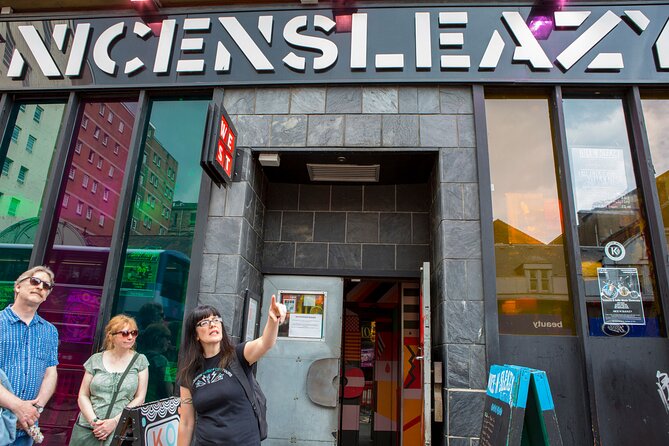
This is where the tour slows down slightly and becomes more social. The group pauses at Nice ‘n’ Sleazy, a dive bar presented here as a place that plays an important part in nurturing young talent.
The practical benefit is obvious. You usually get time to buy a refreshment if you want one. The tour is not built around food, and it is not built around big meal breaks, but this is a real chance to stop being in walking mode and switch into hangout mode.
What I like most is that this is where the guide brings in the changing sound of Sauchiehall Street. This is described as Glasgow’s night-time playground for decades. So the story is not just about a bar. It is about the street-level ecosystem that made the bar useful, and the bar that made the street feel alive.
There is also a specific musical anchor mentioned in the stories: tales linked to the late Apollo. Even if you do not know the details already, the guide’s job is to connect the venue reputation and audience energy to what came next.
This stop is about 20 minutes, which is longer than the others. That extra time is a gift. You get space to hear the story and still breathe.
Two things to consider:
- The tour is about walking and venues, not drinking. You can buy a refreshment, but it is optional.
- Since it is a bar environment, plan for that feel if you prefer quieter settings.
King Tut’s Wah Wah Hut: seeing early footsteps of Oasis and Blur
The walk ends at King Tut’s Wah Wah Hut. If you are a fan of late 90s and early 2000s UK rock, this stop lands like a title card.
You will follow early footsteps of Oasis, Blur, and the Manic Street Preachers. That is the headline. The real value is that you get a chance to understand the venue’s role before the fame hit.
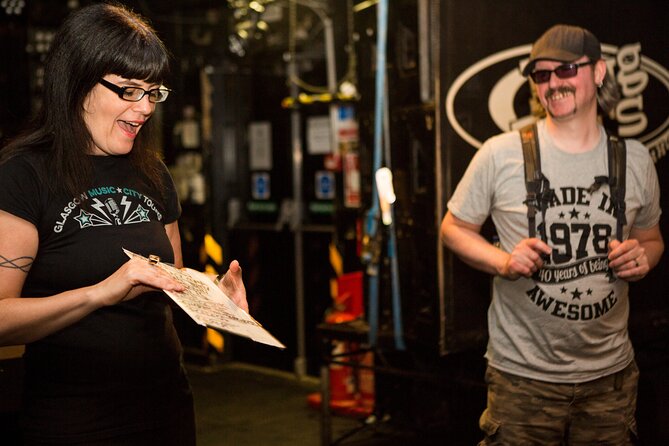
Depending on access, the guide may arrange a moment where you can stand under the lights at King Tut’s and grab a selfie on the stage area that helped launch so many acts. Sometimes you may be able to go upstairs and see more of the stage setting, if the venue staff allow it.
I also like that this final stop is often where the tour’s emotional payoff shows up. You are finishing at a place that still feels active, not a memorial. It makes the stories feel less like history you read and more like culture you can still touch.
This stop is about 15 minutes.
If you want the most out of it, keep your phone ready, wear comfortable shoes, and listen for the guide’s names and the “before they were huge” framing. That is the sweet spot here.
What makes the guiding so good, and why names like Fiona stand out
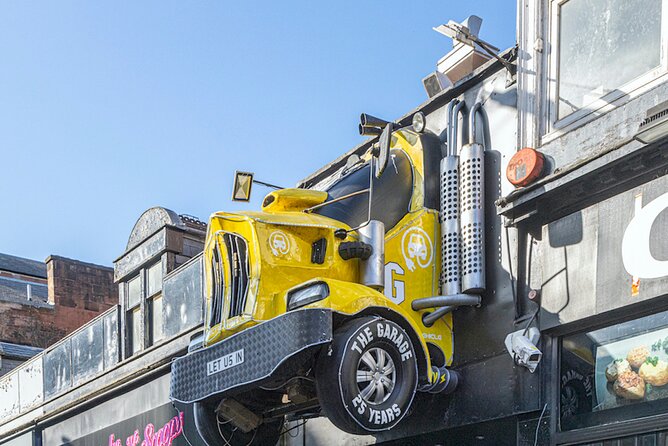
The biggest reason this tour earns such strong ratings is the guide. The stories are detailed, but they are also organized. You never feel lost. You can tell the guide knows how to make a five-stop walk feel coherent.
For example, Fiona is described as a music journalist for 30 years. That matters because it shows in how she talks. The stories do not feel like random facts. They feel connected.
Felipe is also mentioned as a standout guide who knows Glasgow music history well. When a guide is comfortable with the subject, you get clear pacing, sharp context, and less time spent guessing what matters.
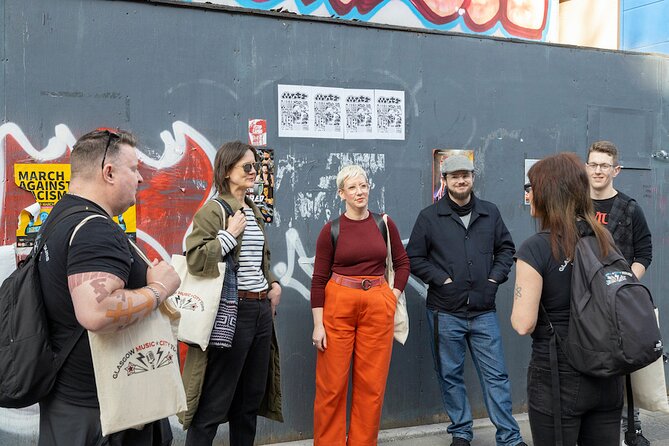
The guide also creates room for personal stories from the group. In the information provided here, older fans are described as sharing memories of shows from the 70s, 80s, and 90s. That kind of shared storytelling is not forced, it just happens because the tour asks you to think about the scene as people lived it.
So for you, the takeaway is simple: show up ready to listen. If you listen, the tour feels like it opens up Glasgow’s music world fast.
Footwear, slopes, and who this walk suits best
This one is not for people who want a totally flat, wheelchair-friendly route. The tour explicitly notes steep inclines and stairs. If you have mobility concerns, you are told to contact the local supplier to discuss options.
What I recommend:
- Wear comfortable shoes with good grip. Glasgow pavements can be slick when weather turns.
- Dress for the weather. You are outside for most of the experience.
- If you are sensitive to stairs, plan accordingly. This is not a short sidewalk stroll.
The minimum age is 14, thanks to licensing laws. That makes the tour more likely to feel like adult-oriented storytelling, but it is still welcoming to teens who care about music.
Group size is limited to 26, which helps keep the tour enjoyable even on busy streets.
How to fit it into your day, from transit to photos
The tour starts at Glasgow Royal Concert Hall, in a convenient part of town with public transport nearby. Since it runs at 2:00 pm, you can pair it with a morning museum visit or a lunch before you head out.
You also get a mobile ticket, which is convenient. Just remember to have it available on your phone for smooth entry.
For photos, the tour’s best moment is typically near the end at King Tut’s. Access is not guaranteed, but the chance to stand near the lights or grab a selfie on the stage area is part of what makes the finale fun. For that, charge your phone and take a quick breath before you arrive, so you are not scrambling.
Booking timing: when to reserve this kind of tour
This tour is described as being booked on average about 29 days in advance. That suggests it is popular enough that you should not wait until the last week of your trip.
If your schedule is flexible, booking earlier also gives you more options if you want to compare times with other things you plan to do in Glasgow.
Should you book the Glasgow Music Mile tour?
Book it if:
- You love music stories with real place names, not just vague nostalgia
- You want a 2-hour walk that uses Glasgow venues in a smart, chronological way
- You like when guides bring in extra context, like the Empire audience reputation and how Sauchiehall Street shaped nightlife culture
- You want a strong chance of a memorable finale at King Tut’s, especially if you are a fan of Oasis, Blur, or the Manic Street Preachers
Skip it or choose another option if:
- Stairs and steep inclines are a problem for you
- You want something mostly indoors, because this is a walking tour across multiple venue points
- You are expecting food included, since refreshments are only available for purchase at stops like Nice ‘n’ Sleazy
If you fit the walking part and you care about music culture, I think this is a solid bet. The value is in the guide, the venue sequence, and those moments where the city’s music past feels close enough to touch.
FAQ
How long is Glasgow’s Music Mile Walking Tour?
It runs for about 2 hours.
What does it cost per person?
The price is $27.06 per person.
Where does the tour start and end?
It starts at Glasgow Royal Concert Hall, 2 Killermont St, Glasgow G2 3NW and ends at King Tut’s Wah Wah Hut, 272A St Vincent St, Glasgow G2 5RL.
What time does the tour begin?
The start time is 2:00 pm.
What is included in the tour price?
The tour includes a tour guide.
Is admission to the venues included?
Yes. The stops listed in the route show admission ticket free at each of the five stops.
Is food and drinks included?
No. Food and drinks are not included.
Is the route suitable if I have mobility issues?
The route includes steep inclines and stairs. You should contact the local supplier to discuss mobility issues.
Can I cancel for a refund?
Yes. You can cancel up to 24 hours in advance for a full refund. If you cancel less than 24 hours before, the amount paid is not refunded.
Just reviewed around Glasgow
- Glasgow: Glenfinnan Viaduct & The Highlands★ 5.0 · 55 reviews
- Glasgow Ghouls, Ghosts and Gruesome Tales Tour★ 5.0 · 63 reviews
- Charles Rennie Mackintosh Walking Tour: Saturdays 10am★ 5.0 · 60 reviews
- Private Glasgow West End Walking Tour★ 5.0 · 66 reviews
- Loch Lomond National Park & Stirling Castle Full Day Tour★ 5.0 · 68 reviews
- St Andrews and the Kingdom of Fife from Glasgow★ 5.0 · 68 reviews
- Glasgow Ghost Hunt: The Soul That Got Away Exploration Game★ 4.0 · 71 reviews
- Oban and the West Highlands Day Trip from Glasgow★ 4.5 · 74 reviews
Walking Tours, compared.
Underground Vaults Walking Tour in Edinburgh Old Town
Read our review →
Edinburgh Castle: Guided Walking Tour with Entry Ticket
Read our review →
Edinburgh Castle Guided Walking Tour in English
Read our review →
Edinburgh Darkside Walking Tour: Mysteries, Murder and Legends
Read our review →
Old Town Walking Tour History and Tales in Edinburgh
Read our review →
Haunted Vaults and Graveyard Walking Tour in Edinburgh
Read our review →Browse the lists this tour appears in